Friday, October 12, 2012
The role that experience and exposure plays in strategic instinct and risk perception
Posted by Balajhi NarayanasamiSaturday, September 29, 2012
I have been studying a lot on strategy of late and recently compiled my thoughts on strategy. My readings, rereadings include, Competitive strategy by Porter, Porter's famous HBR article What is strategy?, Strategy Safari by Mintzberg besides other titles. These readings have shaped up my understanding of the topic and sharing them all below for those who may benefit from it and for those who will enlighten me further with their comments and thoughts.
Strategy is a combination of choices that a business
makes and implements to achieve its guiding purpose. This may include
- choosing customers / segments
- choosing products and/or services and varieties within them
- choosing geographies
- choosing the value proposition
- choosing how the value is configured
- choosing how the value is delivered
- how well it’s products / services are received by the market
- customer experiences and what is missing in that experience
- changing tastes / preferences of customers
- how substitutes and complementary products / services are shaping up
- how various players and their capabilities threaten / complement the businesses’ position
- how the business has performed in meeting the demands of the customers / market, where it has failed, where it succeeded and what it needs to achieve
- gaps in capabilities, resources and infrastructure
Saturday, December 31, 2011
Wishing you all a happy and prosperous 2012.
May this year and years that follow bring joy and success in all of your endeavors.
Wish you all the best
Sunday, July 11, 2010
Wednesday, June 9, 2010
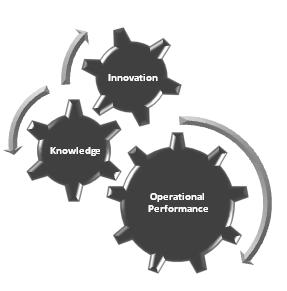
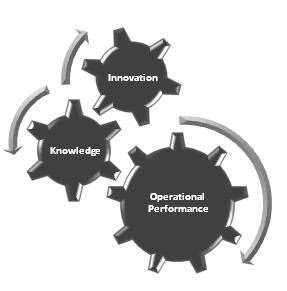
Competitive Performance - Use knowledge & Innovate
Posted by Balajhi Narayanasami Labels: Business growth, Competitiveness, Performance![]() |
| Competitive Performance |
Knowledge
- Well articulated knowledge strategy
- Firm commitment by the top and middle management
- Clearly defined roles and responsibilities with regard to KM system
- Strong and committed knowledge management team
- Clear reward and recognition system
- Comprehensive knowledge capture, transfer, storage, channelling and usage system
- Open work culture that encourages knowledge sharing and usage
- Facility for people to track and know the fate of their knowledge contribution
- Last but not the least, absence of blame culture and a clear accountability structure
Innovation
Innovation is an act of starting something for the first time; introducing something new. By innovating we bring something new to the environment. This is how innovation is defined in dictionaries. In business, innovation often is associated with new products and services. However it can also be associated with new processes, practices, methods etc. that improve core operational parameters viz., cost, quality and time.
Tuesday, June 1, 2010
- Draw a matrix with age and size of receivables on the two axis
- Develop 4 or 6 pools of receivables based on the age and size of receivables
- Devise follow-up system that changes in tact and approach with the movement of the receivable through various receivable pools
- Increase the intensity and level of executives involved for various receivable pools
- With the help of technology capture information generated by the system (like customer feedbacks, dodgings, remarks and intelligence of people following up etc.). They help in understanding different customers, their ways and in evolving the follow-up system. In the long run patterns emerge and give better understanding of various things that delay collection and how to over come them.
Thursday, April 29, 2010
Addressing Operational Issues and Problems in Business
Posted by Balajhi Narayanasami Labels: Operational issues and problems, Operations performance improvement- Mission, Vision, Strategy & Alignment
- Investment, Infrastructure and Resources
- Leading and Management
- Structure, Systems, Processes and Policies
- Execution of Work
- Wastage issues
- Delay issues
- Quality issues
- Control & Management issues
- Work cultural issues
- Key people are identified (Managerial up to supervisory level)
- Orientation on OIPs and the method
- Defining OIPs
- Discussing various categories and types of OIPs
- The OIP Framework diagram will be introduced and explained
- Understanding each of the listed causes and how they cause OIPs
- How to contribute using the framework?
- Workshop
- Identification of OIPs, their causes along with significance and contribution ratings
- OIP framework worksheet will be used
Fig.1 - Stages in combating the OIP virus |
Wednesday, January 13, 2010

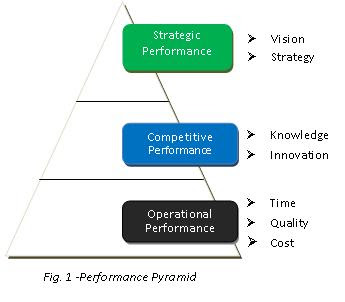
- Strategic
- Competitive
- Operational
Mostly people relate performance to operational performance. As long as the external environment is conducive and friendly to the business then efficient operational performance alone may suffice. However competitive pressures are part and parcel of today’s business environment and add to it the side effects of globalisation, companies can no longer rest on their operational laurels. They have to transcend competitive and strategic performance levels successfully in order to grow and maintain the growth momentum.

Friday, January 1, 2010

Monday, July 20, 2009
Transferring Knowledge & Managing the time aspect
Posted by Balajhi Narayanasami Labels: Challenges of knowledge management, Knowledge managementThese are the three challenges I see:
1) transferring knowledge (better teachers, better learners)
2) time (no one has the time to do it, or learn how)
3) disliking teaching/mentoring.
I think the last two might be overcome if people saw great results from their efforts to teach/learn, but I know that in my organization there is no system in place to help senior people become better teachers, and junior people become better learners. Senior people know what they do in each situation, but don't know how to articulate why they do what they do, and how junior people can translate it into any other situation. Thoughts on any resources for this?
Article : Two big challenges of Knowledge Management
I agree with the challenges mentioned the comment and in fact it was the first point 'Transferring knowledge' that I highlighted in my above mentioned article. To transfer knowledge, it must first be available then shared and shared knowledge must be used for an organisation to benefit from it. The difference is, said article deals with the cultural and system angle of an organisation while the above mentioned comment highlights the capacity and ability of people to share and use knowledge. To some extent the work culture of an organisation deals with the learning aspect. In a progressive work culture people would want to listen and learn. Their dislike to teaching and mentoring would be low to nil. But surely making better teachers and learners out of people working in an organisation is a tremendous challenge unless they are natural teachers and learners.
About Better Teachers
We do not need teachers in the traditional mould (class room teachers) to share knowledge. We need people who are willing to share knowledge (their ways, methods, wisdom, ideas etc.). If an organisation succeeds on this front then the next challenge is to help people articulate what they share. This is more of a glass ceiling than a concrete slab to break through. First, help people to share knowledge. Capture and channel appropriately that shared knowledge reaches people who may benefit from it. Let them pick the brains of the one who shared and learn from it. This way the person who shared gets better with his communication, those who need become better learners and the shared knowledge gets further enriched. Remember, learners can help people become better teachers.
About Better Learners
People learn when they are driven. Not everyone is self-driven and an organisation needs to play
Integrate KM with business applications
The need for time will be felt when knowledge is shared in the traditional way. We can have daily / weekly sessions of knowledge sharing but then less will be learnt at those sessions compared with knowledge provided as the need for it arises. People at work would want to know what to do or how to do at a point of time. If they can be provisioned with the required knowledge at the click of a button or two there will be no need to push for knowledge usage or for that matter learning. But the challenge is in enabling it.
I was implementing my recommendations to improve 'Receivables' performance for one of my clients. We designed and developed a software that would double up as an intelligence system besides providing transactional and MIS support. We provided a field(s) for people to share their knowledge at various stages of the process flow and tagged them as 'Knowledge fields'. People can choose from standard text or type their own. They can share their ideas and views on what transpired and how they handled it. They could also say what they think or feel about a situation or how they expect things to go, especially with collections. These were stored for people to use in similar situations. Anyone who is performing a required activity can access knowledge stored specific to the activity being performed. People can also share general thoughts on how the work is performed and how they can be improved. This system was received with lot of skepticism but eventually turned out to be a beneficial one for the client. It helped people to learn how different customers respond and when they do what it means especially in the light of their subsequent actions. It's not always possible to do it the way I described. There could be work activities that involve no software yet demand involve knowledge acquisition and usage. How do we share knowledge in those cases and how do we use knowledge?
Knowledge management systems integrated with business applications help knowledge usage better than standalone KM systems. This however does not preempt knowledge sharing outside business applications. Corporate Blogs and Forums always provide good platform for people to share and learn especially in the absence of a software to input knowledge acquired. But KM fields in business applications help capture knowledge that is vital and critical for performance improvement.
If after all of the initiatives there still are people unwilling to learn or dislike learning then the organisation will be better off without them. You can work on people unwilling to share but not much can be done with people who are unwilling to learn.
Hope it helps. Good luck.